


How BIBA Transformed Everyday Indian Style
In India’s fashion journey, some stories are not just about design—they are about solving real problems. Meena Bindra is one such name who changed how millions of Indian women dress every day.
At a time when ethnic wear meant endless visits to local tailors, inconsistent fits, and limited choices, she introduced a simple yet powerful idea—ready-to-wear Indian outfits. What began from her home with just ₹8,000 grew into BIBA Apparels, a brand with hundreds of stores and a presence in millions of wardrobes.
For the POISE InStyle woman, her journey is more than inspiring. It is proof that understanding people, staying consistent, and trusting your instincts can build something truly impactful.
The Beginning: A Simple Idea That Solved a Real Need
Before BIBA, ready-made ethnic wear was almost unheard of. Women depended on tailors for salwar kameez, often dealing with delays, poor fitting, and limited design options.
Meena Bindra noticed this gap early on. Without any formal fashion training, she began designing simple, block-printed cotton suits from her home in Delhi. What started as a way to earn some extra income soon turned into a growing demand.
When her designs were picked up by a Mumbai-based store, the response was immediate. Women loved the convenience of ready-to-wear clothing—something they could buy and wear without waiting.
This was the beginning of a shift that would redefine ethnic fashion in India.
Building BIBA: From Homegrown Brand to National Presence
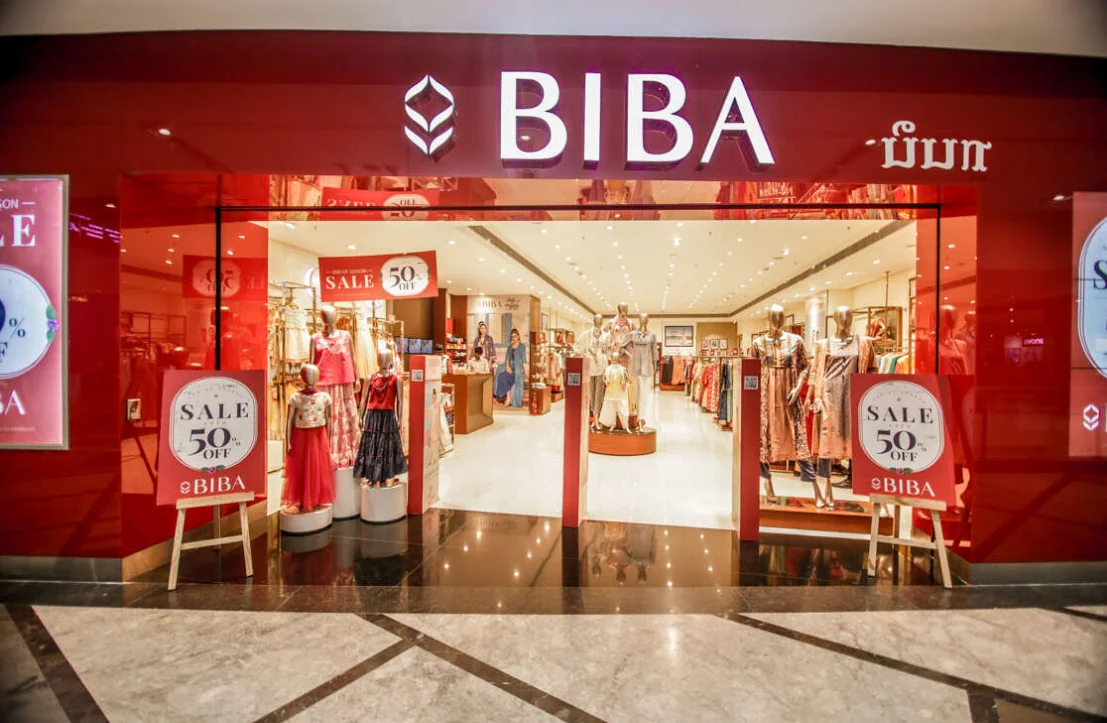
What started small quickly gained momentum. Over time, BIBA expanded into a full-scale retail brand with over 400 stores across India, along with shop-in-shop formats and a strong online presence.
The growth of BIBA closely aligns with the rise of organized retail in India. As malls and branded stores became more common, BIBA positioned itself perfectly—offering affordable, stylish ethnic wear that appealed to everyday consumers.
It wasn’t just about selling clothes.
It was about making Indian fashion more accessible, practical, and relevant.
Understanding the Indian Woman
One of the biggest reasons behind BIBA’s success is Meena Bindra’s deep understanding of her customer.
She didn’t design for runways.
She designed for real life.
Her collections focused on comfort, wearability, and affordability—qualities that resonated with women across different age groups and cities.
Even as the market evolved, BIBA stayed true to its core while expanding into new segments like children’s wear and value-driven lines such as Rangriti.
This balance between consistency and evolution has been key to the brand’s longevity.
A Family Business That Scaled with Vision
A major turning point in BIBA’s journey came when Meena Bindra’s son joined the business. His role in structuring operations and scaling the brand complemented her creative instincts.
Together, they transformed BIBA into a professionally managed company while retaining its original identity. This partnership also helped the brand attract investment and expand at a larger scale.
Their journey highlights an important lesson—growth becomes sustainable when creativity and business strategy work together.
Empowering Women Beyond Fashion
At its core, BIBA is not just a fashion brand—it is an ecosystem that empowers people.
Through its operations, the brand supports artisans, vendors, and small businesses across India. Many of these contributors are women, particularly in areas like embroidery, textile work, and garment production.
The introduction of Rangriti further extended this impact by creating opportunities in tier-2 and tier-3 cities, supporting local vendors and home-based workers.
This approach makes fashion more than just a product—it becomes a platform for empowerment.
Supporting India’s MSME Ecosystem
BIBA’s growth has contributed significantly to India’s MSME sector. Thousands of small businesses are part of its supply chain, from fabric sourcing to final production.
These partnerships have helped small enterprises scale their operations, improve their processes, and become more structured. Many women-led businesses have also benefited from this ecosystem.
By integrating MSMEs into its supply chain, BIBA has created a model where growth is shared across multiple levels.
The Rise of Women-Led Fashion Brands
Today, India is witnessing a surge in women-led fashion businesses. From Instagram-based labels to full-fledged D2C brands, women entrepreneurs are redefining the industry.
Many of these businesses operate in categories that BIBA helped popularize—ready-to-wear ethnic fashion, fusion wear, and occasion-based collections.
With access to digital platforms, e-commerce, and social media, scaling a fashion brand has become more accessible than ever.
In many ways, Meena Bindra’s journey laid the foundation for this new wave of entrepreneurs.
Digital Expansion: Adapting to Changing Times
As consumer behavior evolved, BIBA adapted by expanding into digital channels. Its online store, mobile presence, and social media engagement have helped it reach customers across the country.
This shift reflects a larger trend where fashion is no longer limited to physical stores. Digital platforms have made it possible for brands to connect directly with consumers, creating new opportunities for growth.
Lessons from Meena Bindra’s Journey
Meena Bindra’s story offers valuable insights for anyone building a brand or pursuing a creative path:
- Identify real gaps in the market and solve them
- Start with what you have—perfection is not required
- Trust your instincts and understand your audience
- Empower others to grow alongside you
Her journey shows that success is not about where you start, but how consistently you build.
Cultural Impact: Changing How India Dresses
Meena Bindra didn’t just build a business—she transformed how Indian women approach everyday fashion.
By introducing ready-to-wear ethnic clothing, she made traditional wear more convenient and accessible. She bridged the gap between culture and practicality, allowing women to embrace both effortlessly.
Her influence continues to shape how women dress today—balancing comfort, style, and tradition.
Why Meena Bindra Matters Today
For the POISE InStyle woman, Meena Bindra’s journey is deeply relatable. It reflects ambition, resilience, and the courage to start—even later in life.
Her work shows that fashion is not just about creativity—it is about understanding people and creating solutions that fit into their lives.
Final Thought
Meena Bindra’s legacy goes far beyond BIBA.
She proved that a simple idea—when executed with clarity and consistency—can transform an entire industry. She showed that fashion can be inclusive, accessible, and empowering.
And most importantly, she reminds us that it’s never too late to start building something meaningful.
