

Rethinking Waste in a World That Throws Too Much Away
Every day, we tear open a packet of chips or unwrap a snack without thinking twice about where that packaging ends up. The truth? Most of it doesn’t get recycled. Multilayered plastics—those shiny, crinkly wrappers—are nearly impossible to process using traditional methods. They pile up in landfills, clog ecosystems, and quietly worsen India’s growing waste crisis.
This is exactly where Without steps in.
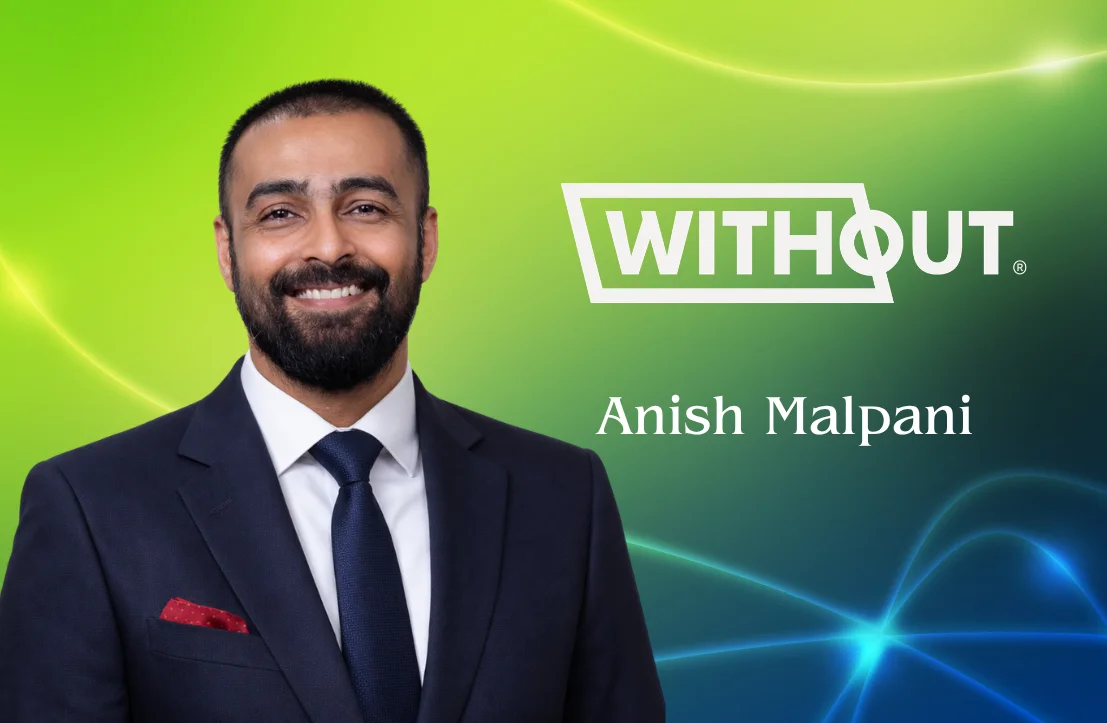
Founded by Anish Kishore Malpani in 2021, Without is not just another sustainable brand- it’s a deep-tech social enterprise built to solve a problem most industries have ignored. Based in Pune, the company transforms “unrecyclable” plastic waste into premium eyewear and lifestyle products, proving that sustainability and quality can go hand in hand.
Their promise is simple yet powerful: “We recycle the unrecyclable, ethically. So, you can be without worries.”
From Global Career to Ground Reality: The Founder’s Shift
Anish Malpani’s journey doesn’t follow the usual startup script. With over a decade of experience across finance, strategy, and impact roles globally, he had built a successful career spanning three continents. As a climate fellow associated with Yale University, he was already deeply connected to sustainability conversations at a global level.
But instead of staying in comfortable boardrooms, he chose to return to India and work on a problem that was both visible and invisible- plastic waste.
Multilayered plastic, used in everyday packaging, is considered “unrecyclable” not because it’s impossible to process, but because no scalable systems exist to handle it efficiently. Anish saw an opportunity where others saw a dead end.
He invested ₹1.8 crores of his own money to get started, assembling a team that combined technical expertise with a shared sense of purpose. What followed was not just the creation of a company, but the beginning of a movement toward circular design.
The Shark Tank India Moment That Changed Everything
Without’s breakthrough into the mainstream came through Shark Tank India Season 3. It wasn’t just another pitch- it was a moment that made people pause and rethink waste.
Anish entered the tank asking for ₹75 lakhs for 1% equity, valuing Without at ₹75 crores. What impressed the investors wasn’t just the idea, but the execution. The brand had already sold 500 sunglasses in just six days, priced between ₹1,000 and ₹2,500. It had also secured a ₹60 lakh R&D grant from Unilever, signaling strong validation from industry leaders.
The pitch resulted in a deal with Peyush Bansal and Ronnie Screwvala, who invested ₹75 lakhs for 3% equity.
More than funding, the show gave Without something equally valuable- visibility. It sparked curiosity, built trust, and brought the conversation around “unrecyclable waste” into everyday households.
The Technology That Makes the Impossible Possible
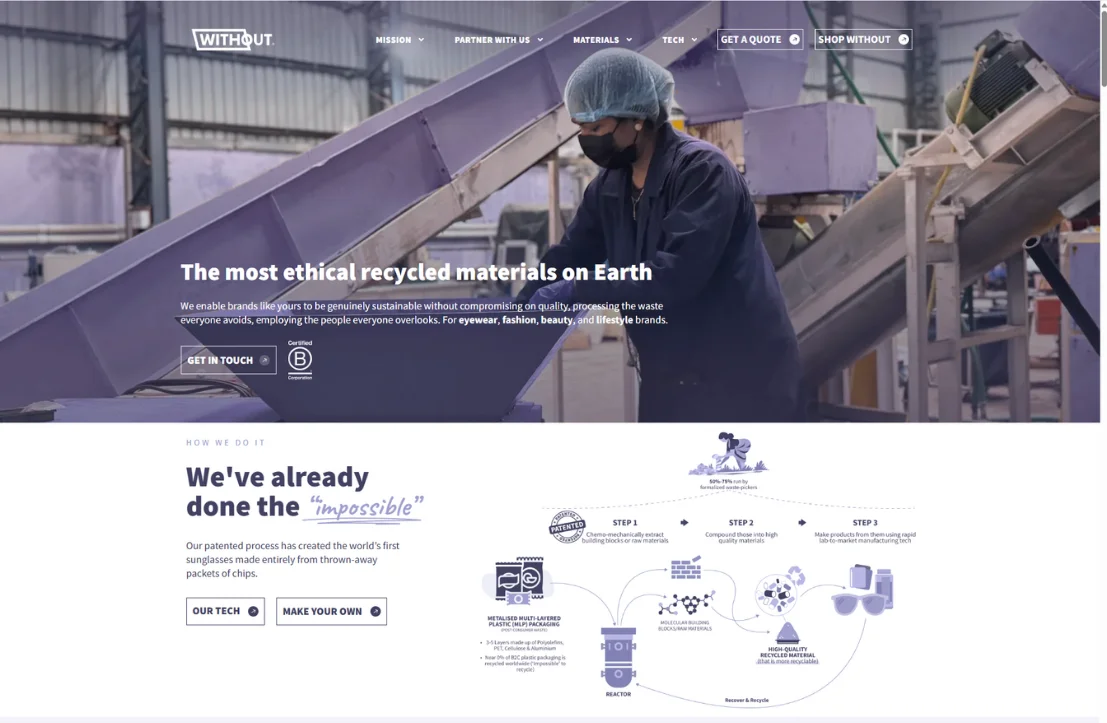
At the heart of Without lies its most important innovation- a patent-pending process that breaks down multilayered plastics into usable materials.
Unlike conventional recycling systems that reject such waste, Without has engineered a way to separate layers of plastic, foil, and ink, transforming them into durable, high-quality raw materials. These materials are then used to create products that are not just sustainable, but genuinely premium.
Their eyewear collection is a standout example. These sunglasses are designed to match industry standards in UV protection, polarization, and durability—without compromising on aesthetics.
This is what makes Without different. It doesn’t ask consumers to “adjust” for sustainability. Instead, it delivers products that stand strong on design, performance, and purpose.
Ethical at Its Core: Empowering Waste Pickers
Sustainability isn’t just about materials- it’s about people.
India’s recycling ecosystem relies heavily on informal waste pickers who often work without fair wages or proper recognition. Without actively integrates these workers into its supply chain, ensuring ethical sourcing and better livelihoods.
By doing so, the brand addresses a deeper issue- poverty linked to waste management. It creates a system where environmental impact and social impact go hand in hand.
This human-centered approach is not an add-on. It is a core part of Without’s identity.
B Corp Certification: More Than Just a Label
In a market flooded with sustainability claims, credibility matters. Without has earned its place as a certified B Lab B Corp, a recognition given to companies that meet the highest standards of social and environmental performance.
The certification process is rigorous. Companies must score over 80 points on B Lab’s Impact Assessment and commit legally to balancing profit with purpose. It involves months of audits, transparency checks, and continuous accountability.
For Without, this certification reinforces what it already practices- ethical governance, environmental responsibility, and community impact.
Challenges on the Path to Scaling Sustainability
Building a purpose-driven brand comes with its own set of challenges.
Scaling ethical sourcing while maintaining transparency is complex. Ensuring consistent quality from recycled materials requires continuous innovation. Competing in a market where sustainable products often face price sensitivity adds another layer of difficulty.
Yet, these challenges are part of what makes Without’s journey meaningful. It is not taking shortcuts—it is building systems that can last.
What the Future Looks Like for Without
With over $2 million raised and strong momentum post-Shark Tank India, Without is now focused on scaling its impact.
The brand is working toward expanding its product range beyond eyewear into lifestyle and fashion categories. It is also exploring partnerships and wider distribution channels, including major e-commerce platforms, to reach more consumers.
At the same time, its core mission remains unchanged- divert more waste from landfills and bring circular design into the mainstream.
Why Without Resonates with Today’s Consumer
Today’s consumers are more aware than ever. They don’t just want products- they want stories, impact, and transparency.
Without delivers all three.
It turns something as overlooked as a chip packet into a conversation starter. It transforms waste into something people are proud to wear. And most importantly, it makes sustainability feel accessible, not overwhelming.
A Brand That Redefines Possibility
Without is not just solving a waste problem- it’s challenging a mindset.
It proves that “unrecyclable” is often just a limitation of imagination and infrastructure. With the right intent and innovation, even the most complex problems can find meaningful solutions.
Through his work, Anish Malpani is showing that sustainability doesn’t have to be a compromise. It can be aspirational, scalable, and impactful- all at once.
And in a world that produces more waste than ever before, that shift in thinking might just be the most valuable innovation of all.
